
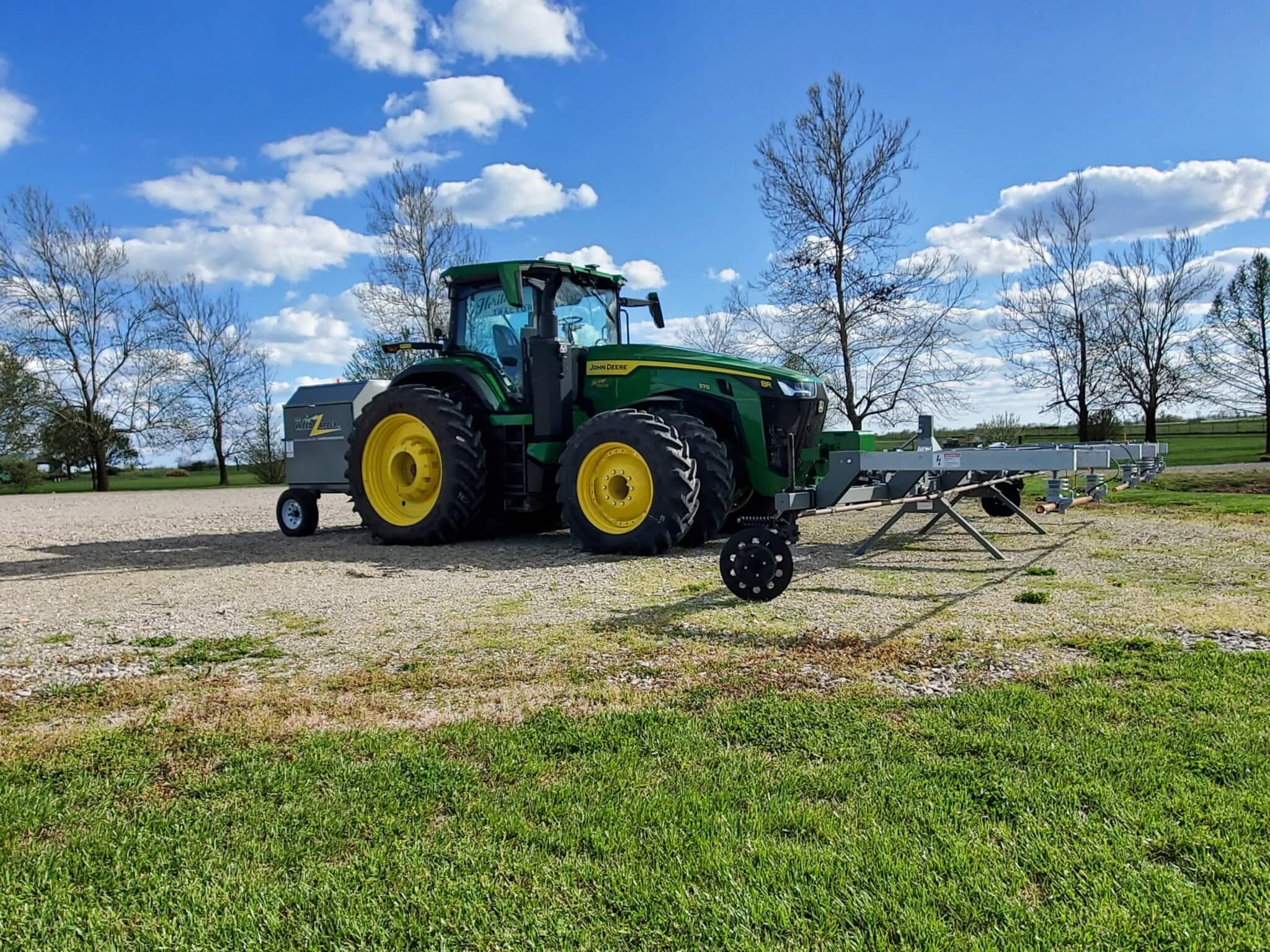
Weed control has become a pressing challenge for farmers across the EU, as traditional herbicide use faces growing limitations. With stricter legislation reducing available products and herbicide-resistant weeds on the rise, relying solely on chemical solutions is no longer sustainable. This shift has left many growers searching for effective alternatives that balance productivity with environmental responsibility.
The need for innovative weed management strategies is more urgent than ever. Uncontrolled weeds can severely impact crop yields, disrupt farming practices, and contaminate harvests. While alternative methods like integrated weed management (IWM) offer promising solutions, their complexity and perceived costs often deter adoption. By exploring sustainable practices and tools, we can help farmers transition to effective, non-chemical approaches that safeguard both their livelihoods and the environment.
Weed control in the European Union faces increasing restrictions as legislation limits the use of chemical herbicides, while resistant weeds continue to spread. Farmers are now shifting toward diverse weed management strategies to maintain sustainability and profitability. Integrated weed management (IWM) plays a central role, combining various tactics to achieve effective control without relying heavily on herbicides.
IWM practices focus on preventive measures, such as cover crops, mulching, and delayed sowing, which minimize weed establishment and growth. Cultural strategies, including competitive crop selection and field margin management, enhance biodiversity while reducing weed impact on arable lands. Mechanical weeding methods like hoeing and dead mulching further reduce pesticide dependence. Where necessary, advanced non-chemical alternatives, such as electrical weeding, are being trialed to address perennial weeds under specific climatic conditions.
The OPER8 network promotes these sustainable weed management solutions across Europe, fostering collaboration among growers, researchers, and stakeholders. By highlighting on-farm results through accessible resources and field demonstrations, OPER8 bridges the gap between innovative methods and practical implementation. This approach ensures weed management strategies align with environmental goals and the long-term viability of cropping systems.
Weed management presents significant challenges for farming systems across the European Union. Overreliance on chemical herbicides has led to herbicide resistance in many weed species, reducing their effectiveness. This issue is exacerbated by stricter legislation reducing the availability of active pesticide ingredients, leaving growers with fewer chemical options to mitigate weed proliferation.
Environmental sustainability is another pressing concern. Persistent use of herbicides contributes to soil degradation, water contamination, and biodiversity loss. These environmental impacts directly conflict with the EU’s Farm to Fork strategy, which prioritizes reducing pesticide use and transitioning toward resilient, sustainable cropping systems.
The implementation of alternative weed control solutions often encounters resistance due to perceived complexity and high initial costs. Non-chemical methods such as mulching, cover crops, and mechanical weeding, including hoeing and electrical weeding, require significant labor and technical expertise. These practices must also integrate effectively into diverse cropping systems while maintaining productivity and profitability.
Climatic variability compounds these challenges, as weed growth patterns often adapt faster than traditional control methods. Perennial weeds, in particular, flourish under changing conditions, disrupting both arable and horticultural systems. Achieving balance between efficient weed management and minimal environmental impact demands continual innovation and the active involvement of stakeholders, including growers, researchers, and policymakers.
Efforts like the OPER8 network and integrated weed management (IWM) strategies demonstrate how collaboration and alternative solutions can address these challenges. However, widespread adoption of sustainable weed management requires stronger support, clear cost-benefit analyses, and accessible educational resources.
Chemical solutions remain a common approach for weed control in Europe, despite growing restrictions and concerns surrounding their use. These methods focus on using herbicides to target unwanted plant growth, but ongoing challenges with herbicide resistance and environmental impacts necessitate careful consideration.
Glyphosate-based herbicides are among the most widely used in the European Union. They are employed in no-till and reduced-tillage systems, pre-sowing applications, post-harvest vegetation control, and crop desiccation. Other chemical herbicides targeting specific weed species or lifecycle stages, such as selective herbicides, are also prevalent in arable cropping systems like cereals and oilseeds.
However, limited active ingredients are available, and stricter EU regulations result in the withdrawal of many herbicides that fail to meet human health and environmental safety standards. This increases the pressure on the remaining chemical options, heightening the risk of resistance development in weed populations.
The continuous and intensive use of herbicides significantly impacts ecosystems. Runoff from treated fields may harm aquatic biodiversity and pollute groundwater. Repeated application also degrades soil quality, affecting its capacity to support sustainable cropping systems. Herbicide accumulation in non-agricultural areas, such as public spaces or natural habitats, further threatens ecological balance.
Herbicide resistance compounds these issues, as more weeds adapt to survive despite treatment. This diminishes profitability for farmers while increasing dependency on alternative and potentially costlier weed management strategies. These environmental and economic concerns highlight the critical need to adopt more sustainable weed management practices across Europe.
Non-chemical weed control methods reduce herbicide dependence while promoting sustainable weed management and biodiversity preservation. These approaches integrate physical, mechanical, and organic techniques to ensure effective weed control.
Mechanical weed control involves the use of tools and equipment to physically remove or disrupt weeds. Common methods include hoeing, plowing, and rotary cultivation. For arable cropping systems, mechanical weeding effectively targets both annual and perennial weeds. Trials in Europe have shown mechanical methods, such as tine harrows or inter-row cultivators, significantly minimize weed competition while maintaining crop growth. Growers adopting these tools help reduce chemical herbicide applications and adhere to sustainable practices.
Electrical weeding, often referred to as the weed zapper technology, uses high-frequency alternating current (AC) to kill weeds at the root level. Unlike traditional methods, this technique leaves the soil and surrounding ecosystem undisturbed, preventing erosion and protecting biodiversity. Pilot programs have demonstrated success in managing weeds without harmful emissions or herbicide residue, making it a sustainable weed control solution in both cereals and vegetable cropping systems.
Organic farming employs methods like mulching, cover crops, and crop rotation to suppress weed growth. Mulching prevents sunlight from reaching weed seeds, while cover crops compete with weeds for resources. Delayed sowing is another effective technique, as it minimizes weed germination ahead of planting. Integrated weed management (IWM) strategies that combine these practices significantly reduce the environmental impact and support the European Union’s goals of sustainability and reduced pesticide use. By leveraging these alternatives, growers align their practices with profitability and ecosystem health, mitigating herbicide resistance concerns.
Rapid progress in technology is transforming weed management across Europe to address challenges such as herbicide resistance and regulatory constraints. These innovations present more sustainable and efficient solutions for maintaining arable crop production and preserving biodiversity.
Precision agriculture uses advanced technologies like AI and GPS to target weeds with accuracy. Systems equipped with sensors and cameras identify specific weeds within cropping systems, analyzing patterns and densities. Implementations such as variable rate application reduce the need for extensive herbicide use, minimizing environmental impact while increasing profitability. For example, smart sprayers differentiate between crops and weeds, applying treatments only where needed. This improves efficiency and meets European Union goals for sustainable farming.
Real-time data analysis helps growers monitor weed management strategies and adapt to parameters like climatic variability. Comprehensive mapping enhances integrated weed management (IWM) by supporting informed decisions on non-chemical alternatives, such as mulching or cover cropping, to limit weed proliferation.
Robotics is advancing sustainable weed control through autonomous machinery. Automated weeding robots target specific weeds through machine learning and mechanical devices. These robots provide alternatives to chemical herbicides by using techniques like hoeing or electrical weeding to eliminate perennial weeds at their roots without harming surrounding crops and ecosystems.
Autonomous tractors and implements navigate arable lands without human intervention, ensuring effective operational efficiency in pest management. As a result, farmers achieve cost savings while mitigating the environmental impact of traditional weed management methods. This approach aligns with the EU’s sustainability objectives and supports biodiversity preservation.
Incorporating robotics with AI-driven platforms amplifies agricultural innovation, reducing the environmental and human health risks associated with the indiscriminate use of pesticides or herbicides. These advancements prepare stakeholders for the future of global food security within sustainable agricultural systems.
Analyzing current weed control methods in the EU highlights their strengths and weaknesses. Sustainability, herbicide resistance, and profitability remain crucial factors influencing their viability.
Chemical herbicides remain widely used due to their effectiveness and ease of application. However, increased herbicide resistance and stricter European Union (EU) regulations limit their long-term sustainability. For example, glyphosate-based products pose risks to biodiversity and soil health, increasing their environmental impact.
Mechanical weeding methods, such as hoeing and rotary cultivation, offer non-chemical alternatives to reduce herbicide dependence. These techniques are highly effective in arable cropping systems but require significant labor and equipment investment. For perennial weeds, these methods may prove less effective compared to chemical solutions.
Integrated weed management (IWM) combines cultural practices like using cover crops, mulching, and crop rotation with agronomic techniques to control weeds. IWM reduces the need for chemical herbicides and aligns with EU sustainability objectives. However, complexities in adopting these strategies and higher initial costs can decrease adoption rates among growers.
Technological innovations, like weed zappers and GPS-guided robotics, enable targeted weed control with minimal environmental impact. Despite their potential to transform sustainable weed management, upfront costs and limited accessibility currently hinder their widespread adoption in Europe.
In Southern Europe, drought-prone conditions and frequent climatic extremes challenge weed management strategies. The use of cover crops has shown promise in conserving soil moisture and suppressing weed growth, but inconsistent rainfall limits its effectiveness in cereals and other crops.
Across Northern Europe, growers often adopt mechanical weeding and electrical weed control due to stricter pesticide regulations. These non-chemical solutions align with local sustainability goals, though they require sufficient farm infrastructure and seasonal labor availability.
The OPER8 initiative, active throughout the EU, demonstrates success stories in integrating IPM and precision agriculture tools. For example, in France and Germany, collaborations among growers, researchers, and stakeholders have improved profitability and reduced emissions while promoting biodiversity-friendly practices.
In examining these regional cases, we see how localized factors—like climatic variability and grant agreements—determine the success of sustainable weed management strategies.
Addressing weed control challenges in the EU demands a shift toward sustainable, innovative solutions that balance productivity with environmental stewardship. By embracing integrated approaches and leveraging advanced technologies, we can reduce reliance on chemical herbicides while supporting biodiversity and soil health.
Collaboration among farmers, researchers, and policymakers is essential to drive adoption of practical, effective strategies. With continued investment in education and resources, we can empower farmers to implement solutions that ensure long-term agricultural sustainability and resilience.
Farmers in the EU are facing challenges due to stricter regulations on chemical herbicide use and the rapid increase in herbicide-resistant weeds. These factors reduce the effectiveness of traditional herbicides, forcing farmers to explore alternative solutions.
Herbicide resistance occurs when weeds adapt over time to survive exposure to herbicides, rendering them ineffective. This limits farmers’ ability to control weeds, leading to increased crop losses and higher management costs.
Integrated Weed Management (IWM) is a sustainable approach that combines multiple weed control methods, such as cultural, mechanical, and biological practices, to reduce reliance on chemical herbicides. It focuses on prevention and long-term management.
Stricter EU regulations limit the use of certain chemical herbicides to protect the environment and promote sustainability. This creates pressure on farmers to adopt non-chemical, eco-friendly weed management strategies.
Chemical herbicides can harm biodiversity, degrade soil health, and contaminate water ecosystems. Overuse also contributes to herbicide resistance, increasing the need for sustainable alternatives.
Non-chemical methods include mechanical weeding (hoeing, rotary cultivation), mulching, cover cropping, and using innovative tools like the weed zapper. These methods reduce herbicide dependence while promoting biodiversity.
Climate change alters growing conditions, enabling weeds to adapt quickly and thrive. This makes weed control more challenging and requires diverse management strategies to address evolving weed populations.
The OPER8 initiative supports sustainable weed management across Europe by facilitating collaboration among farmers, researchers, and stakeholders. It encourages practical implementation of innovative, non-chemical solutions.
Non-chemical methods often require significant investment in terms of equipment, labor, or expertise. While these methods are sustainable, their perceived complexity and upfront costs can discourage adoption.
Advanced technologies like AI, GPS, robotics, and automation enable precise and efficient weed control. These innovations enhance Integrated Weed Management by reducing herbicide use and supporting sustainable farming practices.


 English
  Español
  Français
  Deutsch